
In this guide
TECHNOLOGY, EXPLAINED VISUALLY
Equipment & illustrations
 Enlarge ↗
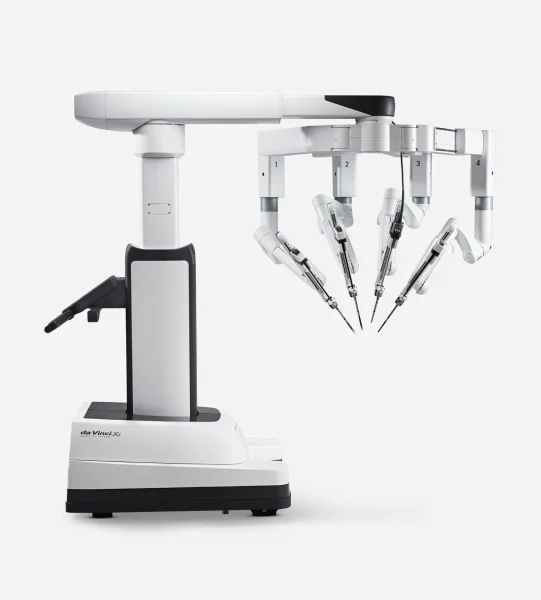
da Vinci Xi
A surgeon-controlled system with a magnified 3D view and wristed instruments, used for procedures including robotic prostatectomy.
Image: Intuitive ↗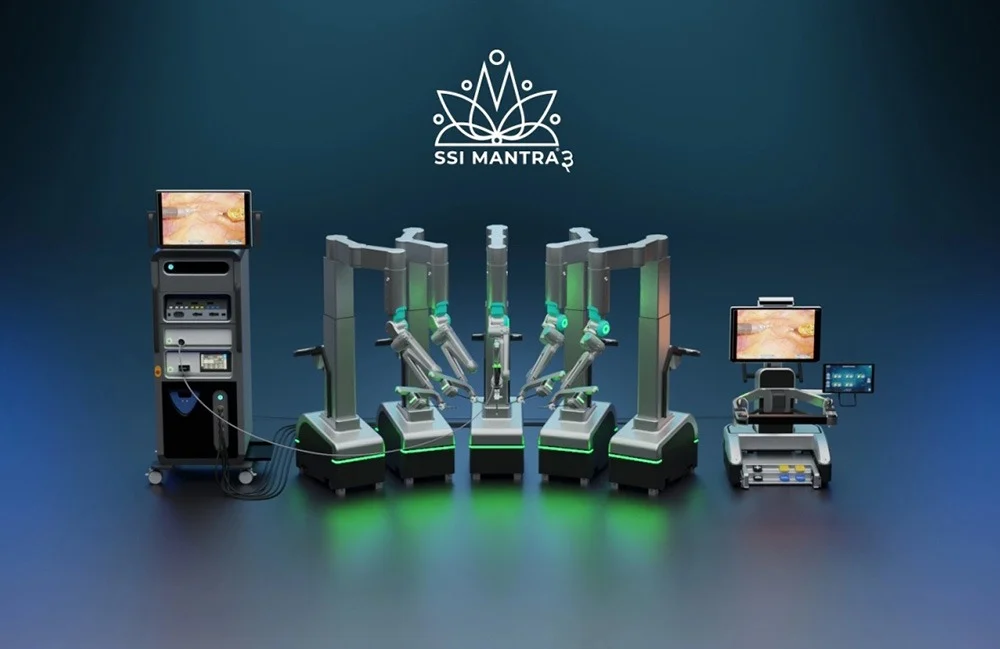 Enlarge ↗
SSI Mantra 3
A modular robotic platform with separate instrument arms and a surgeon console. This manufacturer rendering shows the system configuration.
Image: SS Innovations via iXBT ↗What does robotic prostatectomy involve?
Radical prostatectomy removes the prostate and seminal vesicles to treat cancer. The bladder is then joined to the urethra. Lymph nodes may also be removed when indicated.
The surgeon controls the robotic instruments throughout the operation. The platform supports minimally invasive access; it does not operate independently.
Cancer control
The operation and the extent of tissue removal are planned around the location and extent of cancer.
Urinary function
Preserving appropriate supporting structures and planning rehabilitation are important parts of the discussion.
Sexual function
Nerve preservation may be considered when cancer clearance allows. Baseline function and other health factors influence recovery.
Different approaches. Individual selection.
Nerve-sparing prostatectomy
The nerves associated with erections lie close to the prostate. Your surgeon discusses whether preservation on one or both sides is appropriate. It cannot guarantee recovery of erections.
The Hood technique
This approach aims to preserve selected tissues supporting the urethra during prostate removal. Ask which structures can safely be preserved in your case, how cancer location affects the plan and what urinary recovery to expect.
Retzius-sparing prostatectomy
This approach reaches the prostate from behind, preserving anterior supporting structures. Earlier urinary recovery has been reported in selected settings. Suitability and the balance between functional recovery and cancer clearance need individual review.
How do I choose between techniques?
Ask your surgeon why a particular approach fits your MRI, biopsy, anatomy and baseline function. A technique name alone does not establish that it is the best operation for you.
Further reading: American Cancer Society: surgery · EAU: treatment guidance
Plan for recovery before surgery.
- Before the operationReview fitness for anaesthesia, medications, blood-thinner planning and baseline urinary and sexual function. Ask about pelvic-floor training.
- Hospital and catheter careYou will receive instructions for the urinary catheter, wound care, activity and warning symptoms. Discharge and catheter-removal timing are individual.
- Pathology and PSAThe final tissue report helps determine the next steps. PSA follow-up is needed even when recovery is going well.
- Return to everyday lifeDiscuss driving, work, exercise, continence rehabilitation and sexual rehabilitation. Recovery is a process, not a fixed deadline.
Bring these questions to your consultation.
Would surveillance or radiation be reasonable for me?
Ask how your cancer risk and general health change the balance between surgery, radiation and monitoring. Each has a different pattern of benefits, side effects and follow-up.
Could I need further treatment after surgery?
Yes. The pathology, postoperative PSA and subsequent PSA trend may lead to discussion of additional treatment. Surgery is not a guarantee that further therapy will never be needed.
What should I ask about recovery?
Ask about the expected catheter plan, pelvic-floor support, continence, erections, return to work and who to contact if recovery is not progressing as expected.